
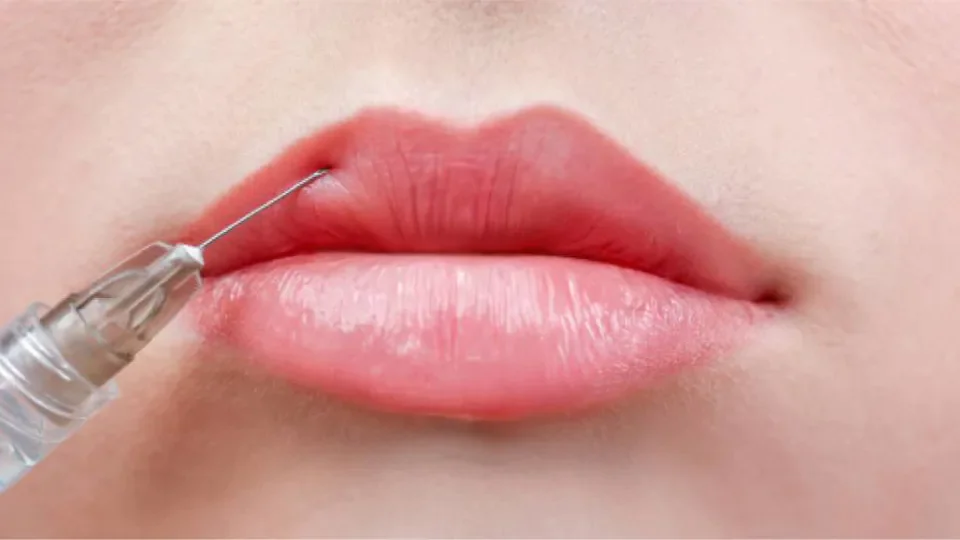
Dermal fillers have transformed aesthetic medicine, offering a non-surgical way to restore volume, enhance facial features and create beautifully balanced results. When treatment is carefully planned and expertly performed, the outcome should look subtle, refreshed and completely natural.
In recent years, however, filler migration has become one of the most talked-about subjects online. Social media is full of dramatic before-and-after images and videos claiming to show filler moving around the face, leaving many people questioning whether treatment is safe or worrying about fillers they may have had years ago.
The reality is far more reassuring.
At Aesthetics Lab in Belgravia and Primrose Hill, we often see patients who come to us with concerns after reading about filler migration or because they feel their previous treatment no longer looks quite right. Sometimes filler has moved slightly, but just as often, the issue turns out to be something else entirely. Natural ageing, repeated treatments over many years, swelling or simply having more filler than necessary can all create changes that are easily mistaken for migration.
The most important thing to remember is that every face is different. If you are concerned about your filler, an experienced practitioner can assess what is happening and advise whether treatment is needed. In many cases, there are straightforward solutions that can restore natural-looking results.
What Is Filler Migration?
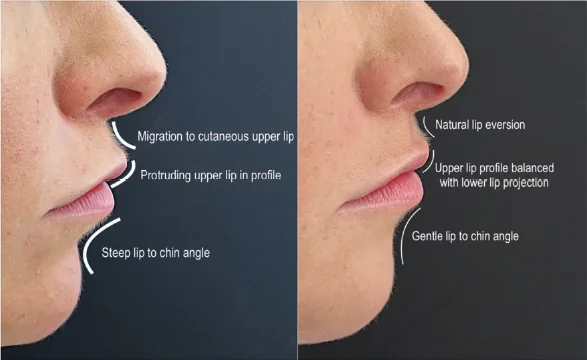
Filler migration happens when dermal filler sits outside the area where it was originally intended to remain. This does not mean filler suddenly moves around the face overnight. In most cases, if migration occurs, it develops gradually over time and is usually quite subtle in the early stages.
The lips are the area most commonly associated with filler migration because they are constantly moving when we eat, drink, smile and talk. Patients may notice that the border of the lips looks less defined or that there is fullness extending slightly beyond the natural lip line. Migration can also occur in other areas of the face, although this is less common.
It is worth remembering that not every change in appearance is caused by migrated filler. One of the biggest misconceptions we see is patients assuming any fullness must be migration, when it may actually be the result of normal swelling after treatment, natural tissue changes or previous filler that has simply accumulated over time.
What Causes Filler Migration?
There is rarely one single cause. Instead, it is usually a combination of factors.
Repeated Treatments Over Time
One of the most common reasons we see is patients having regular filler appointments without reviewing what is already present.
Hyaluronic acid filler gradually breaks down, but not always as quickly as many people expect. If additional filler is repeatedly added before previous treatment has fully settled, the tissues can become overfilled, increasing the likelihood of the product spreading beyond the intended area.
This is one reason why regular assessment is just as important as the treatment itself.
Too Much Filler For The Area
Every area of the face has natural limits. While it can be tempting to continue adding volume, particularly in the lips, more filler does not necessarily create a better result. In fact, excessive filler often reduces definition rather than enhancing it.
At Aesthetics Lab, our approach is always to work with your natural facial proportions rather than chasing volume.
Individual Anatomy
Everyone’s facial anatomy is unique. Skin thickness, tissue support, muscle movement and facial expressions all influence how filler behaves after treatment. A treatment plan that works beautifully for one patient may not be appropriate for another.
This is why personalised consultations are so important.
Injection Technique And Product Choice
Choosing the right filler is only part of the process. Equally important is selecting the correct injection technique and placing the filler in the appropriate tissue layer. An experienced practitioner will tailor both the product and technique to the treatment area, helping to achieve stable, natural-looking results.
How Do I Know If My Filler Has Migrated?
It can be surprisingly difficult to tell. Many of the photographs shared online show results immediately after treatment when swelling is still present. Others compare images taken years apart, where natural ageing has also influenced facial appearance.
At Aesthetics Lab, we always recommend an assessment before assuming migration has occurred.
Signs that may suggest filler migration include:
- A loss of definition around the treated area
- Fullness extending beyond the natural borders of the lips
- Changes in facial proportions that were not present after treatment
- Persistent puffiness months after treatment has settled
Equally, you may simply need reassurance that everything looks completely normal.
Can Filler Migration Be Fixed?
One of the advantages of modern hyaluronic acid dermal fillers is that they can usually be dissolved using an enzyme called Hyaluronidase.
For many patients, simply knowing that treatment can be reversed if necessary is reassuring.
The first step is always a consultation. Rather than immediately recommending dissolving, your practitioner will assess your facial anatomy, discuss your treatment history and determine whether migration has genuinely occurred.
For milder cases we would usually start by deciding whether any treatment is needed at all. Sometimes the changes are minimal, and simply allowing more time or avoiding additional filler may be the best option.
In more advanced cases, we would normally look at dissolving the migrated filler before considering any further treatment. The aim is not simply to remove filler, but to restore natural facial balance.
Can You Have Dermal Fillers Again Afterwards?
Many patients choose to have dermal fillers again after previous filler has been dissolved. In fact, starting with a clean foundation often allows for an even better result. Rather than replacing exactly what has been removed, treatment can be approached much more conservatively, using carefully placed filler to restore shape, support and definition while maintaining natural facial movement.
At Aesthetics Lab, we believe aesthetic medicine should enhance your features, not change them. Taking a gradual approach often produces the most elegant, long-lasting outcomes.
Is Filler Always The Right Treatment?
One of the biggest changes in aesthetic medicine over the last few years has been the move towards improving overall skin quality rather than relying on filler alone.
Patients often arrive requesting more volume when what they actually need is healthier, stronger skin. During your consultation, we assess the bigger picture before making recommendations.
Profhilo®
If your main concern is that your skin feels less firm or has lost its youthful glow, Profhilo® may be more appropriate than additional filler.
Rather than creating volume, Profhilo® spreads beneath the skin to improve hydration while stimulating collagen and elastin production. The result is smoother, healthier-looking skin with improved elasticity and a naturally refreshed appearance.
It is particularly suitable for patients beginning to notice mild skin laxity or crepey texture without significant volume loss.
Polynucleotides
For patients whose skin appears tired, fragile or lacking in quality, Polynucleotides work differently again.
These regenerative injectable treatments encourage tissue repair and support healthier skin from within. They are especially popular around delicate areas such as the eyes, where improving skin quality often creates a fresher appearance without needing additional volume.
At Aesthetics Lab, combination treatments are never about doing more. They are about choosing the right treatment for the right concern, creating results that age beautifully over time.
How Can You Reduce The Risk Of Filler Migration?
While no aesthetic treatment is completely risk free, there are several ways to reduce the likelihood of migration.
These include:
- Choosing an experienced medical practitioner
- Following a personalised treatment plan rather than chasing trends
- Avoiding unnecessary top-up appointments
- Allowing adequate time between treatments
- Focusing on natural enhancement rather than maximum volume
- Having regular reviews to assess whether further filler is genuinely needed
A conservative approach nearly always produces the most elegant results.
Frequently Asked Questions
Does filler migration happen to everyone?
No. Most patients who receive well-planned dermal filler treatment never experience noticeable migration.
Is lip filler migration dangerous?
In most cases, migration is an aesthetic concern rather than a medical one. If you are worried about changes in your filler, an assessment can determine whether any treatment is needed.
Can filler migration be reversed?
Yes. Hyaluronic acid fillers can usually be dissolved using Hyaluronidase if this is the most appropriate treatment.
Will I need more filler after dissolving?
Not always. Some patients decide they are happy without further filler, while others choose a more conservative treatment plan once the area has healed.
How do I know if I need filler or another treatment?
A consultation is the best place to start. Sometimes concerns that appear to be related to volume loss are actually caused by changes in skin quality, collagen or elasticity, making treatments such as Profhilo®, Polynucleotides or Morpheus8 more appropriate.
Book A Consultation At Aesthetics Lab
If you have concerns about filler migration or simply want expert advice before having dermal fillers for the first time, book a consultation.
At Aesthetics Lab, every consultation begins with understanding your concerns, assessing your facial anatomy and recommending the treatment that is genuinely right for you. Whether that involves carefully placed Dermal Fillers, dissolving previous filler, or improving skin quality with Profhilo® or Polynucleotides our focus is always on creating natural, balanced results that complement your features.
We welcome patients to our Belgravia and Primrose Hill locations, as well as those travelling from Chelsea, Kensington, Knightsbridge, Hampstead and across London for personalised, medically led aesthetic care.