
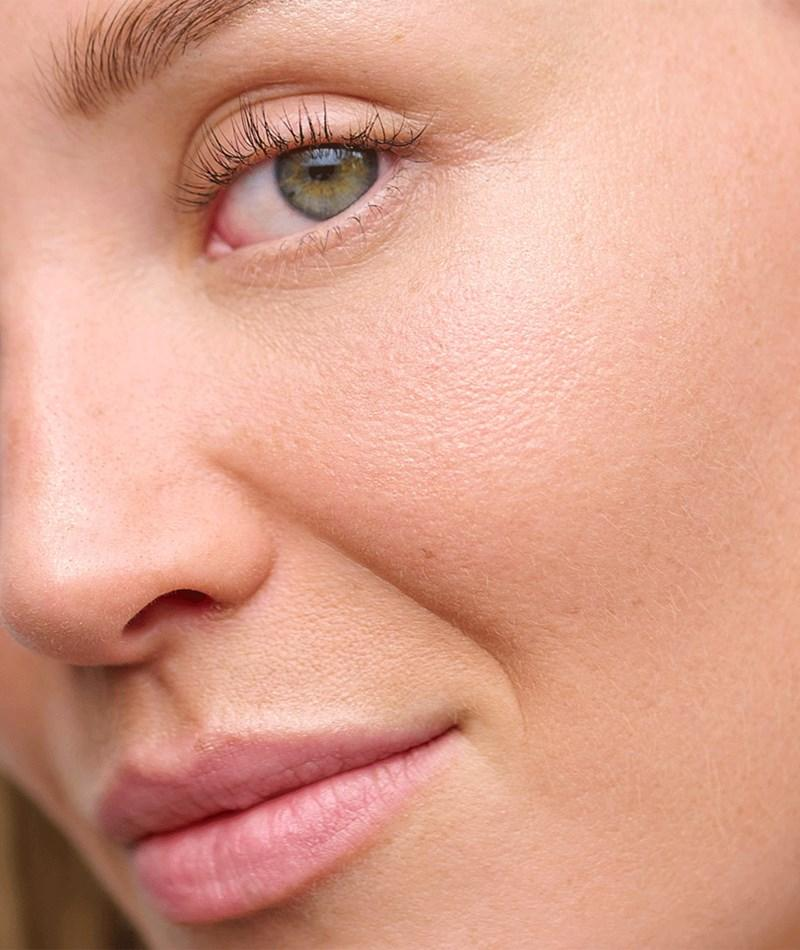
By the end of summer, it is common to look in the mirror and feel that your skin has changed. It may appear rougher, less even or simply not as fresh as it did a few months earlier. Make-up may sit differently, pores can seem more noticeable and areas of sun damage that were less obvious before summer may suddenly stand out.
This is not necessarily because your skin has dramatically aged over a few weeks. Summer simply creates a particular set of pressures. UV exposure, heat, perspiration, travel, air conditioning and changes to your normal skincare routine can all influence how the skin looks and feels.
Once autumn arrives, the focus can shift from protecting the skin through summer to improving its quality.
At Aesthetics Lab in London’s Belgravia and Primrose Hill, two treatments we frequently consider when texture is the main concern are i-Pixel Laser Resurfacing and Skin Peels. They work in different ways, and importantly, stronger treatment is not automatically better treatment. The right approach depends on what has changed within your skin and how much correction is actually needed.
Why Does My Skin Texture Look Worse After Summer?
When people talk about “skin texture”, they can be describing several different things.
For one person, it might mean skin that feels slightly rough and looks dull. For another, it could be enlarged pores, fine lines or old acne scars that seem more noticeable in certain lighting. Sun damage can also create an uneven quality to the complexion that makes the overall surface look less refined.
Summer can accentuate several of these concerns. UV exposure has a cumulative effect on the skin and can contribute to changes associated with photoageing. At the same time, repeated exposure to heat, sunscreen, perspiration and changing environments can leave some complexions feeling congested or out of balance.
There is also the simple fact that summer routines are rarely perfect. Holidays, flights, late nights and long days outdoors often mean that the skincare routine followed diligently in January becomes rather less consistent in August.
The result can be a mixture of:
- rough or uneven skin texture
- dullness
- more visible pores
- sun damage
- uneven pigmentation
- fine lines
- congestion
- increased visibility of existing acne scarring
The important question is not simply how to exfoliate all of this away. It is which layer of the skin needs attention. That distinction helps determine whether a clinical peel, laser resurfacing or a carefully planned course of treatments makes the most sense.
What Are Clinical Peels and How Can They Improve Skin Texture?
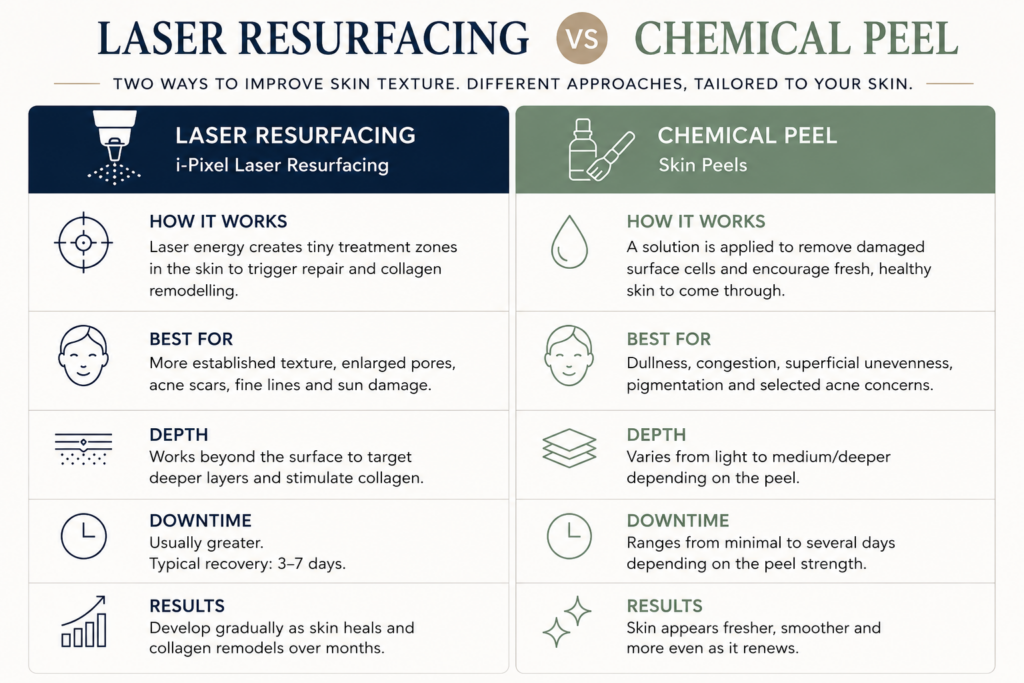
A clinical skin peel is a controlled form of exfoliation designed to remove damaged or tired surface cells and encourage fresher cells to come through.
At Aesthetics Lab, Skin Peels are not treated as a single standardised procedure. Light, medium and medical-grade options are available, with treatment selected according to the condition of the skin and the concern being addressed.
This matters because someone with mild post-summer dullness does not necessarily need the same peel as somebody dealing with more established sun damage or pigmentation.
For milder cases, we would usually start by asking whether controlled surface renewal is enough. A light peel, for example, may be appropriate when the main concerns are dullness, mild congestion or a complexion that simply looks less fresh than usual.
As concerns become more established, the practitioner can consider whether a stronger peel is appropriate.
Aesthetics Lab offers several categories of Skin Peels, including options intended for acne and inflammation, ageing concerns, pigmentation and sensitive or rosacea-prone skin. This ability to select treatment according to the skin in front of us is much more useful than choosing a peel purely because it is described as “strong”.
The aim is controlled improvement, not peeling for the sake of peeling.
When Does Laser Resurfacing Make More Sense Than a Peel?
Clinical peels can be very effective for surface-level concerns, but some changes in skin texture sit deeper. When enlarged pores, acne scarring, established fine lines or more noticeable sun damage are part of the picture, exfoliating the surface alone may not provide enough improvement.
For deeper skin concerns, i-Pixel Laser Resurfacing may be a more suitable option.
i-Pixel is a fractional ablative laser treatment that delivers energy into the skin in a pixelated pattern. Rather than treating the entire surface at once, it creates thousands of microscopic treatment zones while leaving areas of surrounding skin intact to support healing.
This controlled process encourages the skin’s natural repair response, including the production and remodelling of collagen and elastin. This is particularly useful when improving skin texture requires more than surface exfoliation.
At Aesthetics Lab, i-Pixel may be used to address:
- uneven or more established skin texture
- enlarged or open pores
- acne scarring
- sun damage
- fine lines and wrinkles
The depth and intensity of treatment can be adjusted according to the condition of the skin and the level of correction needed. A stronger setting is not automatically better. The aim is to use the right level of treatment to create improvement while allowing the skin to heal properly.
Results develop gradually. Changes at the surface become visible as the skin recovers, while collagen remodelling continues over the following weeks and months. This makes laser resurfacing particularly useful when the aim is to improve more established texture and support longer-term changes in skin quality.
Is Laser Resurfacing Better Than a Clinical Peel?
How Do You Decide What My Skin Needs?
This is where an experienced assessment becomes more valuable than choosing a treatment from a menu.
At Aesthetics Lab, we often see patients who know they want “better texture” but are not quite sure what is creating the problem. That is completely normal. Pores, pigmentation, dehydration, scarring and surface congestion can overlap visually.
During consultation, the practitioner can assess what is actually contributing to the change.
For example, if texture is relatively mild and superficial, starting with a Skin Peel may be entirely appropriate. If there are deeper acne scars or more established textural changes, i-Pixel Laser Resurfacing may make more sense.
In other cases, the most appropriate plan may involve progressing from one treatment to another rather than trying to address every concern at the first appointment.
Good skin treatment is often sequential. First identify what needs correcting, then decide how much intervention that correction genuinely requires.
FAQs About Post-Summer Skin Resurfacing
Should I stop using retinol before a clinical peel or laser treatment?
Potentially. Certain active skincare products may need to be paused around treatment, but the exact advice depends on the procedure and products you use. Bring details of your current skincare to your consultation so your practitioner can give you specific instructions.
Can I have laser resurfacing if I still have a summer tan?
Recent tanning and sun exposure need to be discussed before any laser procedure. Do not assume that because summer has ended your skin is immediately ready for treatment. Your practitioner should assess your skin and recent sun exposure first.
Can I wear make-up while my skin is peeling?
This depends on the treatment performed and how your skin is healing. After more intensive resurfacing, it is particularly important not to interfere with the recovery process. Follow the aftercare instructions provided for your individual treatment rather than trying to cover peeling or redness prematurely.
How long before an event should I plan a texture treatment?
Give yourself more time than the minimum quoted downtime. Visible recovery and the point at which your skin looks its best are not necessarily the same thing. If you have a wedding, party or professional event coming up, mention the date during consultation so treatment can be planned backwards from it.
Does having more peeling mean the treatment has worked better?
No. Visible peeling is not a reliable measure of treatment quality. The aim is to create the appropriate response for your skin and concern, not to make the skin shed as dramatically as possible.
Can I treat my neck or body as well as my face?
Potentially. i-Pixel Laser Resurfacing can also be used on selected areas of the body, including for concerns such as stretch marks and surgical scars. Suitability and settings will depend on the area and the condition being treated.
Planning Your Post-Summer Skin Reset
A good post-summer treatment plan does not begin with deciding that your skin needs the strongest laser or deepest peel available. It begins by working out what has actually changed.
Sometimes the answer is relatively simple. A carefully chosen clinical peel may be enough to improve dullness, congestion and superficial unevenness. When texture is more established, i-Pixel Laser Resurfacing gives us the ability to work more deeply and stimulate the collagen remodelling needed for gradual structural improvement.
For some patients, the most effective approach is a considered programme that uses both at different stages.
If your skin feels rougher, less even or simply different after summer, you can book a consultation at Aesthetics Lab in Belgravia or Primrose Hill, London. Your skin can be assessed properly before deciding whether a Skin Peel, i-Pixel Laser Resurfacing or a staged approach is the most appropriate way to rebuild its quality for the months ahead.